Know how much water is being used today. Not at month’s end.
See consumption, connectivity and alerts on the meters you already have installed. No civil works, no trips to the field.
NewReports and work orders, from the first notice to closure, without paper. See a case
45,000+readings in live operation
Demo Water Committee
Consumption today
48,3m³
236 of 238meters reporting
Daily average
46,7m³
min 43,9max 49,6
- 00:00: 0,9 m³
- 01:00: 0,7 m³
- 02:00: 0,6 m³
- 03:00: 0,5 m³
- 04:00: 0,6 m³
- 05:00: 1,1 m³
- 06:00: 2,3 m³
- 07:00: 3,8 m³
- 08:00: 4,2 m³
- 09:00: 3,4 m³
- 10:00: 2,8 m³
- 11:00: 2,5 m³
- 12:00: 3,0 m³
- 13:00: 2,7 m³
- 14:00: 2,4 m³
- 15:00: 2,3 m³
- 16:00: 2,5 m³
- 17:00: 3,0 m³
- 18:00: 3,8 m³
- 19:00: 3,3 m³
- 20:00: 2,0 m³
+4,8%expected 46,1 m³
Interoperable with open industry standards

- NB-IoT
Reading once a month is no longer enough
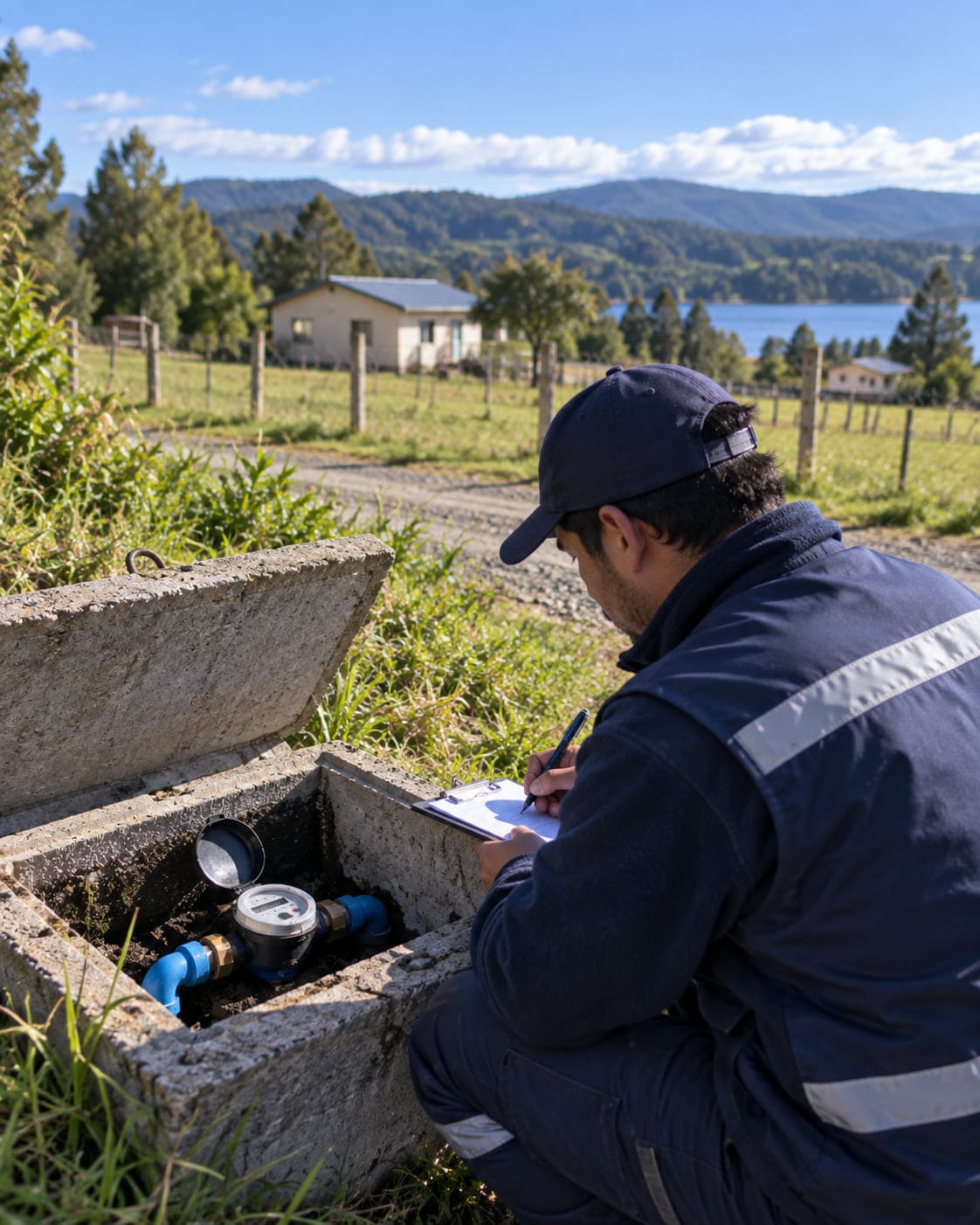
Scattered territory, manual readings once a month and no data in between. Running a rural water system under those conditions is hard.
- Rural Sanitation Services serving more than 2.39 million people.
- 2,475 SSR
- of non-revenue water was recorded by the Chilean water sector in 2024.
- 32.2% NRW1
1 Non-revenue water includes physical losses, apparent losses and other unbilled uses. Sources: MOP (Rural Sanitation Services registry) and SISS (Water Sector Management Report 2024).
Rural water telemetry
What goes unseen today
Leaks that keep running, needless site visits and work no one can trace. Ziktel makes them visible before they grow.
Fewer blind spots. More control.
- 01
Billing
Consumption is only understood when the month closes.
30 daysSame day
Consumption updated per point.
- 02
Leaks
A leak can run for days or weeks with no warning.
WeeksImmediate alert
Automatic alert on continuous flow. If the meter detects a burst, it reports at once.
- 03
History
Scattered information with no traceability.
No dataComplete
A clear consumption history.
- 04
Reading
Requires a site visit or manual reading.
Site visitRemote
Remote reading, no travel.
- 05
Shutoff and restore
Requires a site visit and manual work.
Site visitRemote
Shut off or restore supply from the platform.
- 06
Work management
WhatsApp, phone calls and paper. Hard to follow each case.
No traceabilityTraceable case
Every report can be assigned, with an owner, a status and a closure.
From WhatsApp to a resolved job, with no calls, spreadsheets or paperwork
Every member report becomes an assigned job, gets resolved and stays on record. All without changing the member's habit: they keep using WhatsApp.

Demo case
Cloudy water reported by a member
Case closed
2 h 03 min
From a report to a real fix.
Members keep using WhatsApp. The committee gets a management system.
Less friction more community
This is what your team sees
Consumption per metering point, the fleet on the map and alerts, all in one place.
Illustrative screens, with demo data.
Per point
Consumption, status and last reading for every connection.
In the field
The fleet on the map, with the status of every point.
Alerts
Every alert shows which point needs attention.
- More efficient operation
- Decisions on real data
- A more connected team
From the meter to your screen, without new cabling
The reading travels on its own, by radio, from the meter to your screen.
Sensor at the point
on your meter, if it outputs a signal
LoRaWAN gateway
our own network; online via LTE, fibre or Ethernet
Ziktel cloud
data isolated per organisation
Dashboard and portal
web for the team and for members
The service, not just the software
We bring the meters into operation in the field
We register every meter, verify its signal against the gateway and leave it reporting.
On our side
- Gateway installation
- Registration of every meter
- Point-by-point signal test
- Commissioning
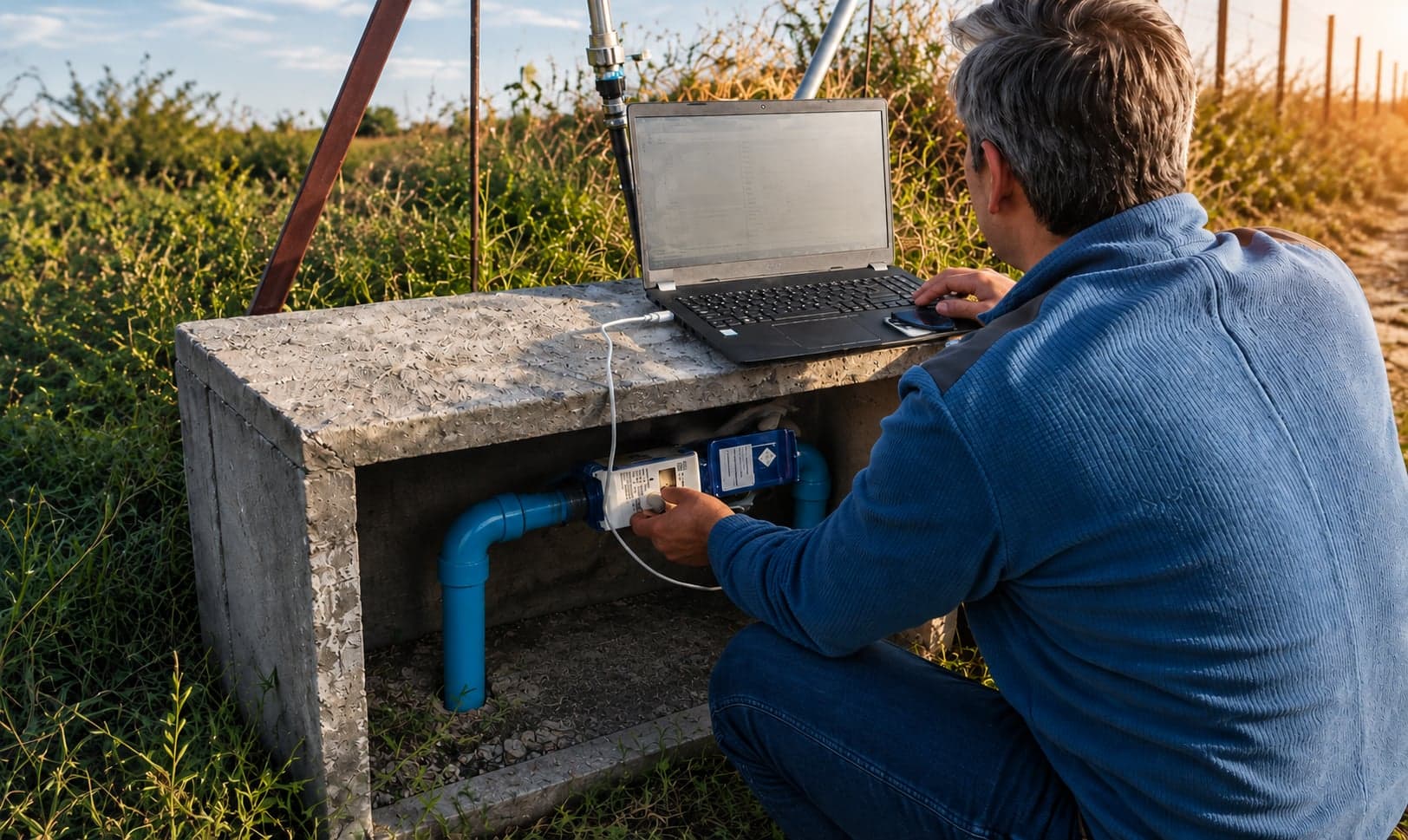
01Registration
We register every meter
On the existing connection point, with no civil works and no new wiring.
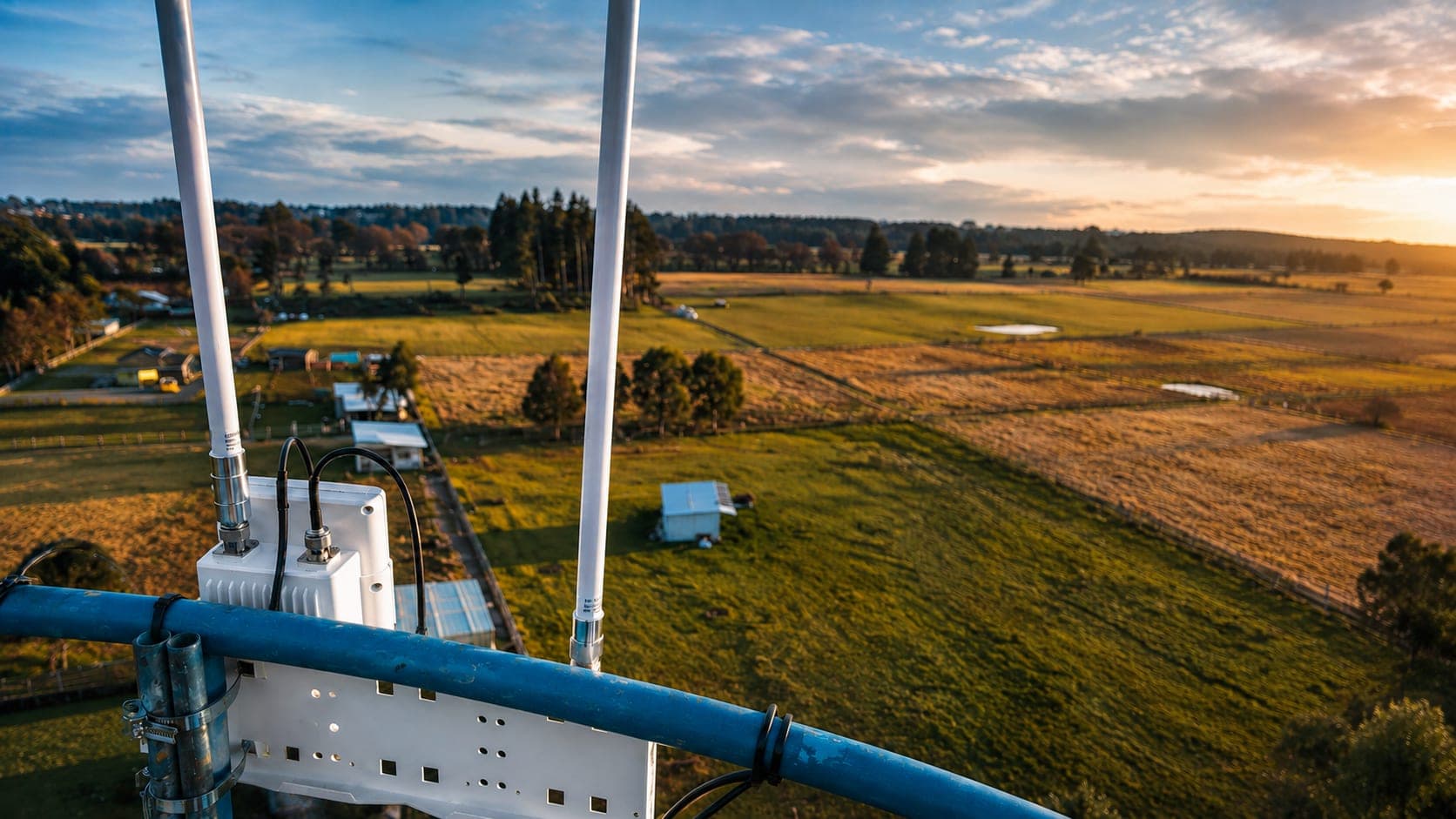
02Network
We install the LoRaWAN gateway
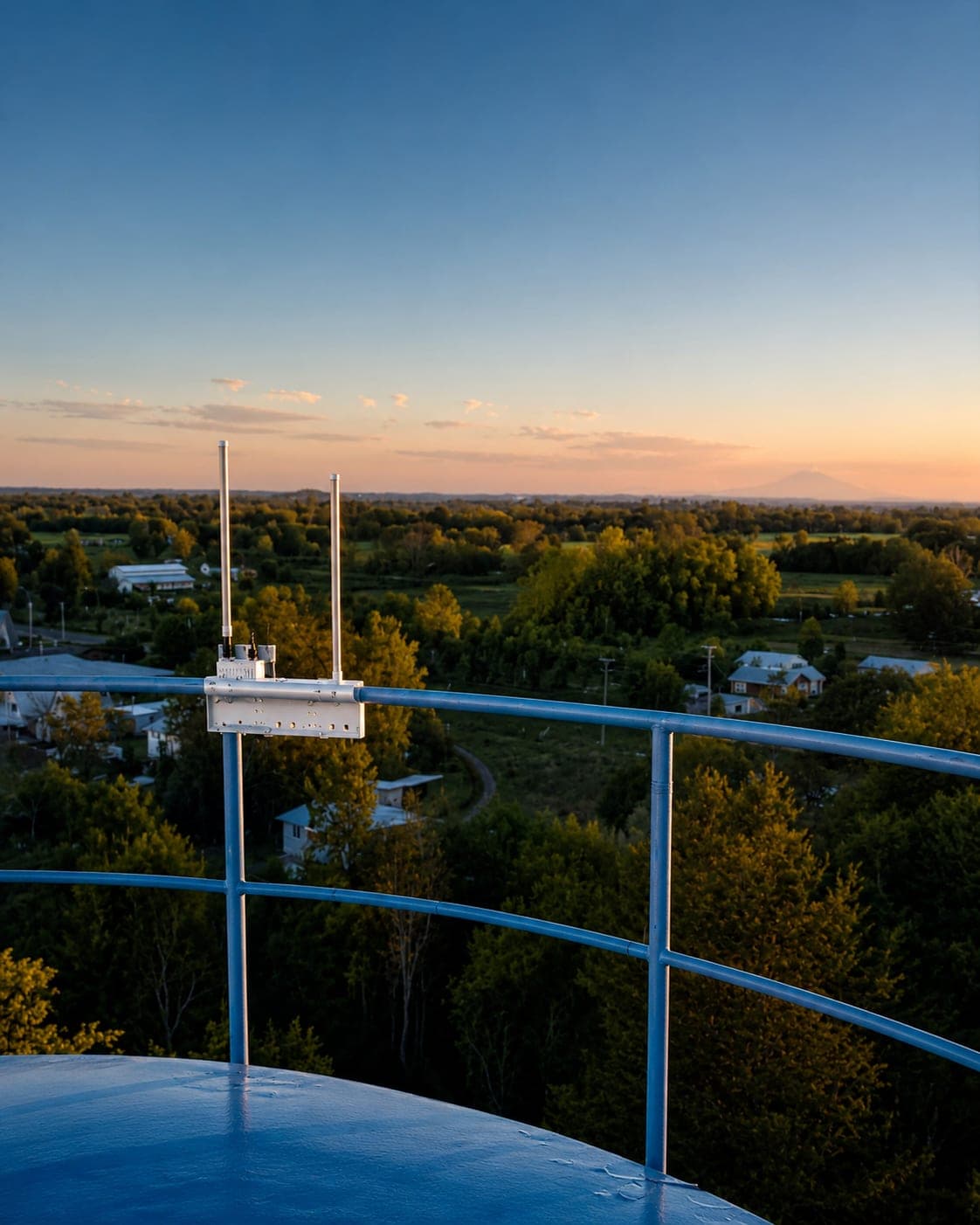
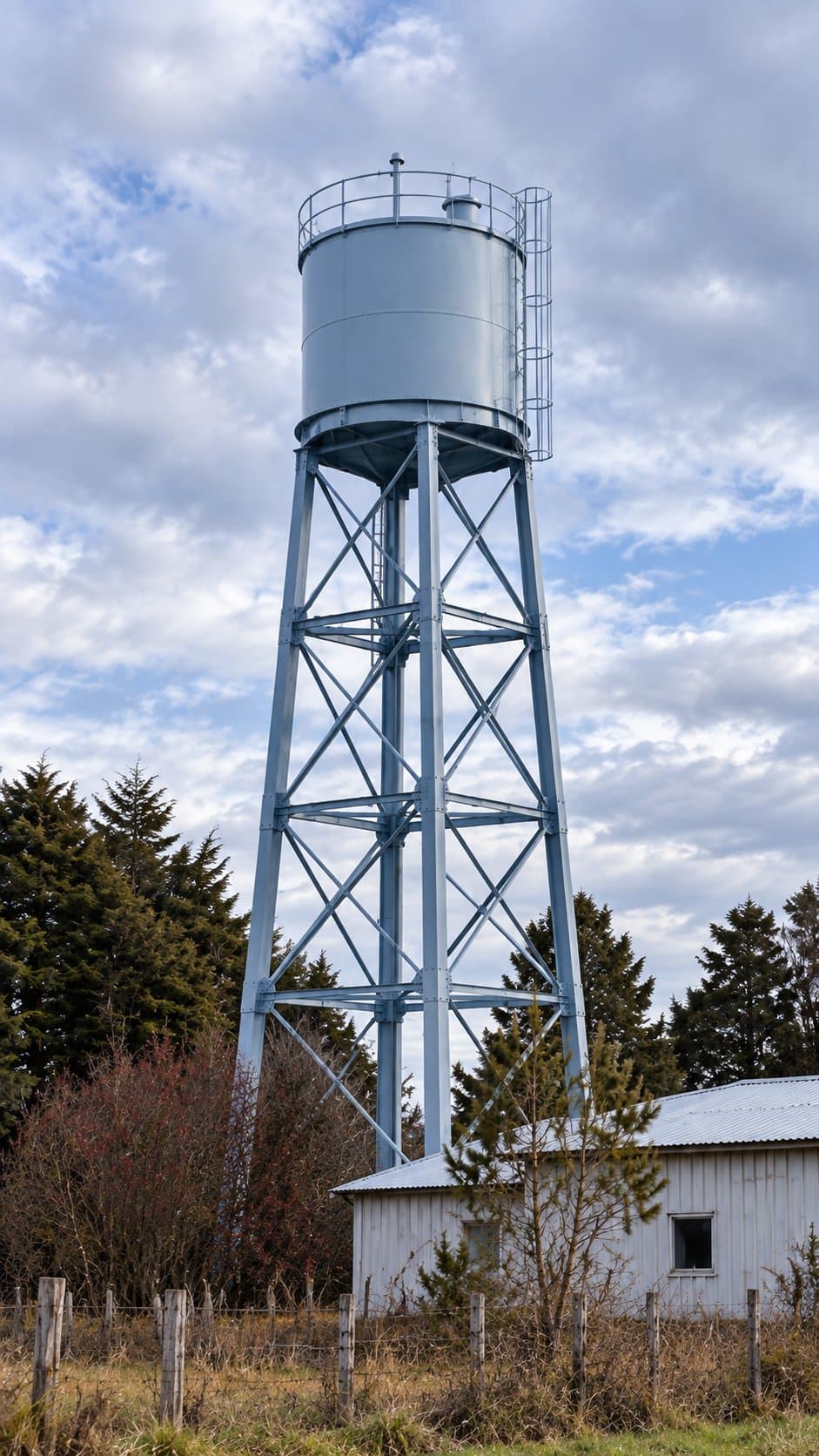
On the tank or a high point. It does not depend on cell coverage in the area.
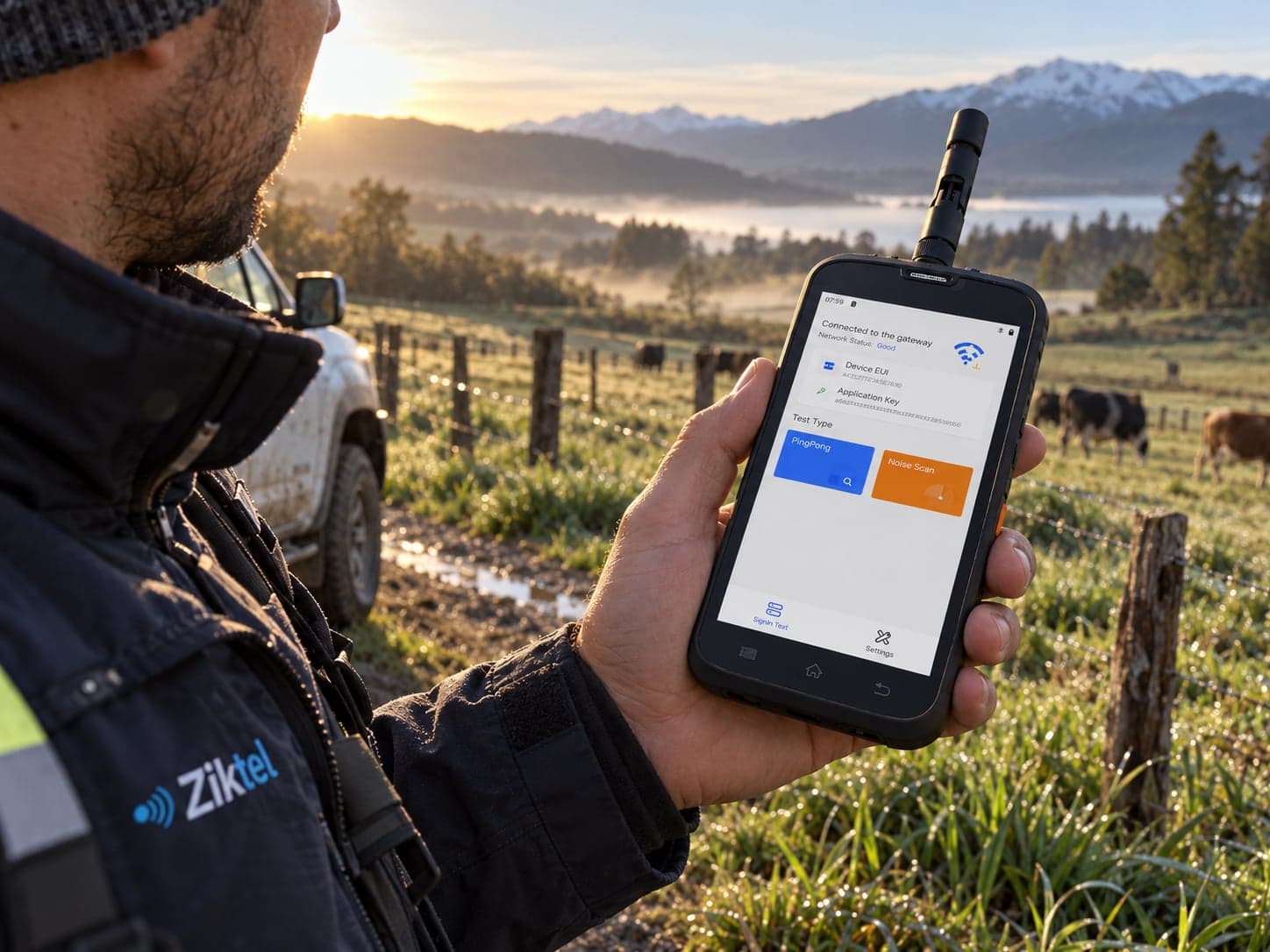
03Commissioning
Every link is verified
We test the signal point by point and leave it reporting.
The meter behind every reading
Ultrasonic, no moving parts, with a built-in LoRaWAN radio. It measures down to a drip and raises its own alarms.
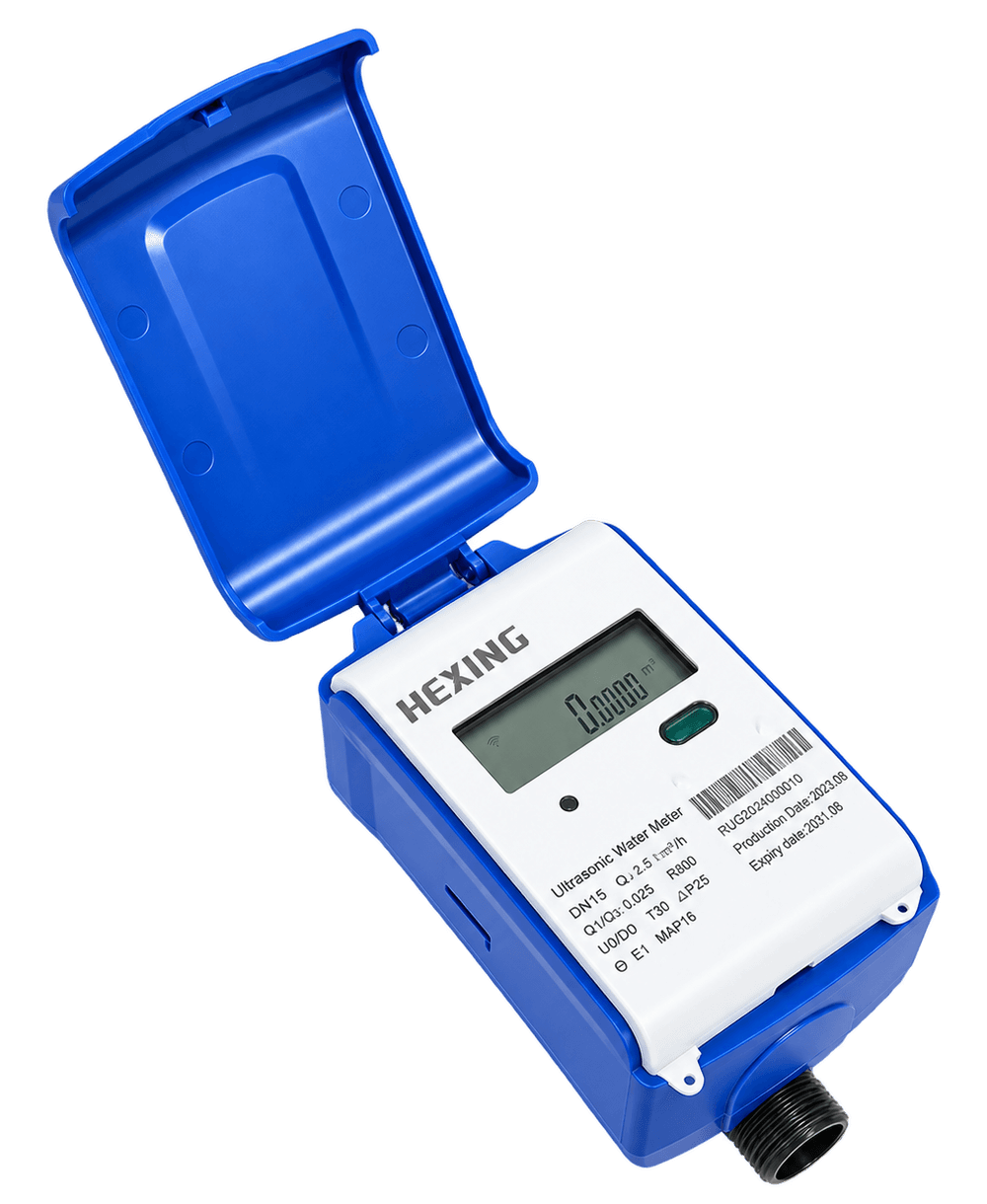
Remote shut-off and restore
The valve sits inside the meter itself: cut or restore supply from the platform, without going to the connection.
Certified for drinking water in Chile
Certified by DICTUC to NCh 3274/1:2018, accuracy class 2 and R400 range (Q3 2.5 m³/h). Certificate No. 1644190, issued 23 May 2025, with indefinite validity.
- From 1 L/h
- Registers even a drip
- Up to 15 years
- Lithium battery, no power wiring
- IP68
- Submersible, fit for flooding meter pits
- Leaks and dry pipe
- Detected by the meter itself
- Ultrasonic
- No moving parts to jam or wear out
Technical data: LoRaWAN AU915 radio, on-board log of 366 daily readings and bidirectional metering. ISO 4064 / EN 14154 standard; operates from −25 to +55 °C and installs in any position.
Bulk meter for large-diameter pipes
The same ultrasonic metering, with no moving parts, for mains and tank outlets.
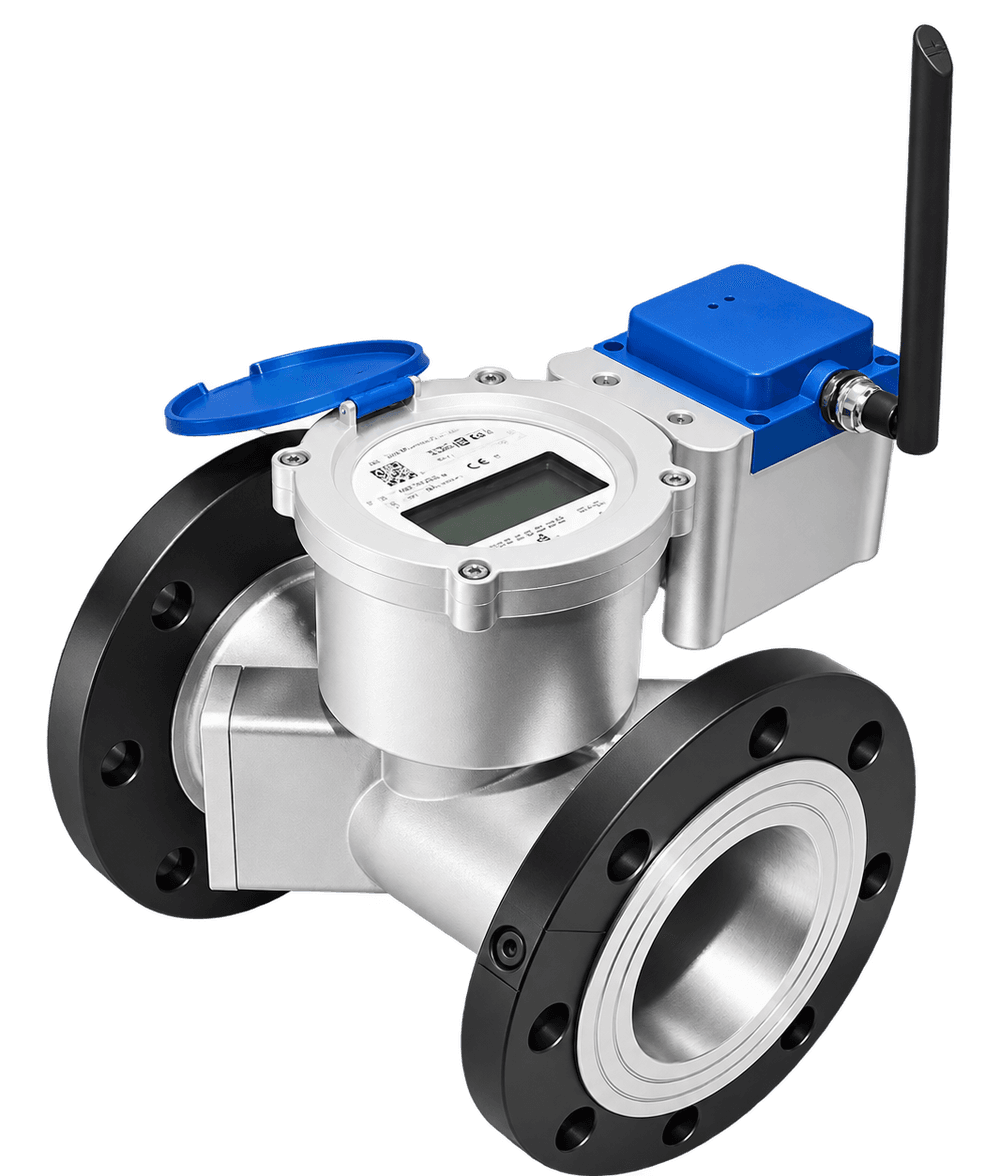
- DN50 to DN600
- For large-diameter pipes
- 500:1 range
- Measures high and low flows, and detects drips
- Bidirectional
- Measures both ways: helps detect theft
- Over 10 years
- Long-life battery
- RS-485 output
- Connects to the committee telemetry
Technical data: tube with no moving parts, movable flange for quick installation, empty-pipe detection, LCD display with instantaneous flow, totals and alarms, IP68 submersible protection and built-in RS-485 and NB-IoT communication.
What every board meeting asks
The ones that always come up, answered before the site visit.
Does it need civil works or power run to the meter?
No. The transmitter runs on battery and is sealed where there is no power, or draws from mains where there is. Power never has to be run to the connection point and no trenching is needed. The meter requires no straight pipe runs before or after and fits in any orientation: the meter changes, the plumbing does not.
What if there is no cell coverage in the area?
It still works. The network is our own LoRaWAN: a gateway mounted on the tank or tower picks up readings from the meters in the area and forwards them. It does not depend on any carrier coverage at each connection point, which is exactly where cellular-based solutions fail.
How often do readings arrive?
Every day, automatically and with no site visits. The dashboard shows hourly consumption for the current day, so the committee sees what is happening today rather than what happened last month.
Does it detect leaks?
Yes, at two levels. The meter itself has leak and dry-pipe alarms and reports on its own, without depending on someone to review spreadsheets. And the platform raises alerts by configurable rule: thresholds, patterns and quiet windows, so operators only see what matters. The meter registers from 1 L/h, so a dripping tap stops being invisible.
Who can see our data?
Only your organisation. Each one works in a space separated from the rest, and there is no way for the readings, members or consumption of one to show up in another. Each gateway delivers only the data that belongs to it, so a compromised device cannot reach the information of another organisation. Backups are scheduled, with configurable retention.
Contact
Start with one measurement point
A 30-minute demo with real data.
No commitment · Nothing to install
- A 30-minute call: which meters you have and what you need to see
- Platform demo with real operating data
- Pilot scoped to a single measurement point