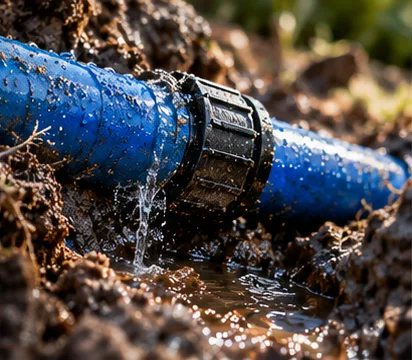
Water meter keeps spinning: is it normal? How to tell if it is a leak
If you have closed every tap and the meter is still counting, water is flowing into your home. Most of the time it is an internal leak: a loss after the meter that you can neither see nor hear. The good news is that you can confirm it yourself in a couple of hours, with no tools and at no cost. Here we explain how, where to look and who is responsible, in the case of a rural drinking water committee (APR) in Chile.
A water meter that runs on its own or keeps running: what it means
A meter normally only moves when water flows through it. If every tap and appliance is closed and the water meter keeps running, water is escaping somewhere in your home's plumbing, after the meter. The most common causes are:
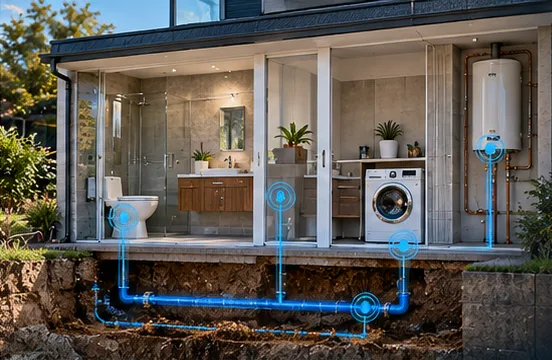
A toilet tank that leaks and refills again and again.
A dripping tap or a worn flexible hose.
A gas water heater or tank heater leaking at its connections.
An automatic sprinkler or a tank with a faulty float.
A buried pipe in the yard or inside a wall.
Is it normal for a water meter to spin very fast?
It depends. When appliances are running, the meter spins faster the more water flows: that is normal. But if it spins fast with everything closed, the consumption it is recording is large, for example a tap left open somewhere or an overflowing tank. Check it right away.
There is one exception: if the meter started registering right after a water outage, it may be air in the pipe. Tell your committee before you go looking for a leak.
In plain terms
With everything closed, the meter should not move. If it does, something is using water.
How to tell if you have an internal water leak: the 3-step test
This is the same test a plumber usually starts with, and you can do it yourself. Ideally do it when nobody will use water, for example at night.
- 1
Close everything. Taps, shower, washing machine, automatic sprinklers and any appliance that uses water. Then look at the meter: on mechanical ones, the low-flow indicator (a small star or triangle that spins); on digital ones, the number that goes up or the flow indicator.

- 2
Note the reading. Write it down or take a photo, and use no water for 1 to 2 hours. The longer you wait, the easier it is to notice a small loss.

- 3
Read it again. If the number went up or the indicator is still active, there is continuous consumption: you have a leak or an appliance that is using water.

If the reading did not change
There was no continuous consumption in that period. If you suspect a loss that only shows up now and then, repeat the test overnight.
Where to look for the leak
Once the leak is confirmed, search from the simplest to the hardest. These are the usual places:
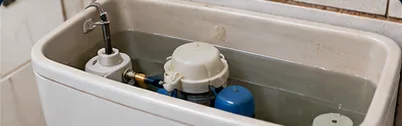
Toilet tank
Put a few drops of food colouring in the tank and do not flush. If after a while the colour shows up in the bowl, the tank leaks.
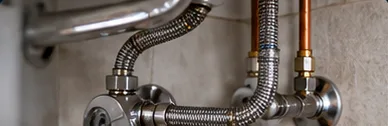
Taps and hoses
Check under sinks and at the shut-off valves for drips, damp or limescale at the joints.
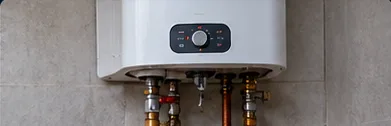
Water heater
Look at the water inlet and outlet connections and around the unit for damp.

Yard and walls
With buried pipes, the sign is often greener grass or wet soil along the pipe route; in walls, damp stains.
Mechanical or digital meter: what to look at on each
The test is the same, but what changes is where you see the consumption:
| What to look at | Mechanical | Digital (ultrasonic) |
|---|---|---|
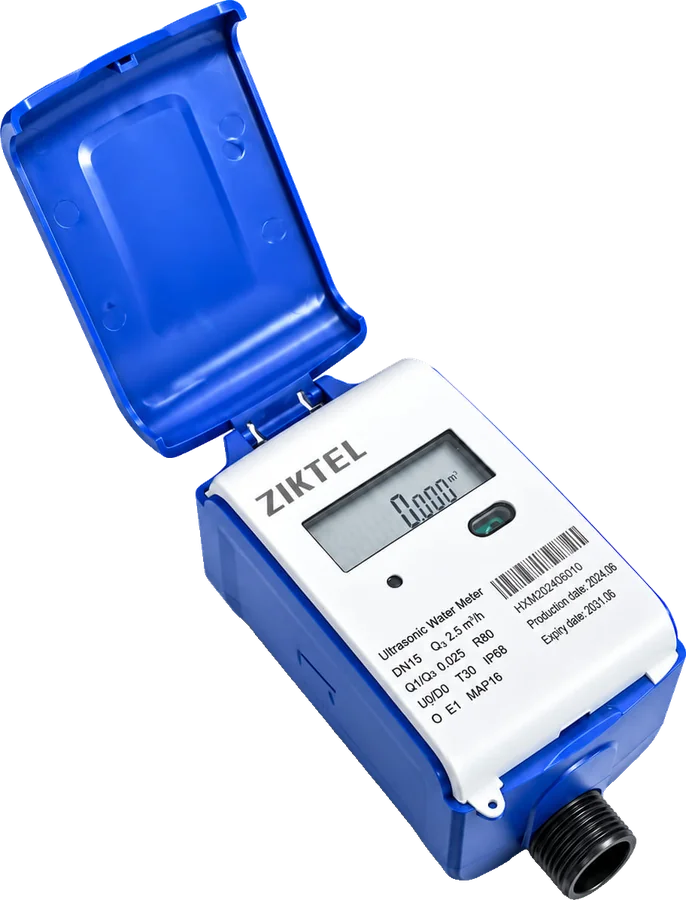
| Consumption signal | Star or triangle that spins | Number or flow indicator |
| Moving parts | Yes | No |
| Reading | Number wheels | Digital display |
Whose leak is it? Before and after the meter
In an APR, the committee covers the maintenance costs of the connection up to and including the meter. This is set out in the Regulation of Law 20,998 (MOP Decree 50, art. 39 letter e), cited in the SISS Fiscalisation Manual for rural water services. What lies after the meter, the home's internal plumbing, falls outside that obligation and is normally the member's responsibility. This is a general guide: your committee may have its own rules, so ask it.
Leak rebate: ask your committee
Some committees apply a rebate on the bill when there is a leak. The working edition (draft, November 2025) of the SISS Fiscalisation Manual for rural water services presents it as optional. Ask your committee whether it applies it and within what deadline, and fix the leak as soon as possible.
How much does it cost to detect a water leak in Chile?
There is no single price, and we are not going to make one up. What we can tell you:
- The meter test is free: it is the one above.
- If the test confirms a leak and you cannot find it, call a plumber. Some use a geophone (which listens to water in the pipe) or a thermal camera.
- The cost varies with the visit, the method and where the leak is: ask for a quote before approving the work.
How remote reading helps
Without remote reading, a leak is usually discovered when the bill arrives, with the water already lost. With daily reading, the committee sees each connection's consumption, and the platform opens an alert when a connection has consumption that never stops: an occupied home always has hours without use, and if the water never rests, there is a loss.
Ziktel's ultrasonic meter has no moving parts, detects drips and raises its own alarms.
An alert without waiting for the period to close
When a connection consumes without a break for a whole day, or keeps a very high flow for hours, the platform opens an alert and notifies the committee's operator on WhatsApp, with how many litres so far and since when, so they can check it before the bill arrives. It does not prevent a leak from happening, but it lets you find out while something can still be done.
Frequently asked questions
Why does my water meter run on its own?
Because water is flowing after the meter. Most of the time it is a leak in the toilet, a tap, the water heater or a pipe, or an appliance using water without you noticing, such as an automatic sprinkler.
My water meter keeps running with everything closed: what should I do?
Do the 3-step test to confirm it and first check the toilet tank (with colouring), the taps and the water heater. If you cannot find it, call a plumber and let your committee know.
Is it normal for a water meter to spin very fast?
Only if water is in use: the more flow, the faster it spins. If it spins fast with everything closed, there is significant consumption and you should check right away.
How can I tell if I have an internal water leak?
Close everything, note the meter reading, use no water for 1 or 2 hours and read it again. If it went up, there is a leak or continuous consumption.
How much does it cost to detect a water leak in Chile?
The meter test is free. If you need a plumber, with a geophone or thermal camera, the price varies: ask for a quote before hiring.
Official sources
This article is a general guide and does not replace the text of the Regulation of Law 20,998, the SISS manuals, your committee's rules or a plumber's advice. Any leak rebate depends on each committee.
Get started today
We'll walk you through the platform in a 30-minute demo, no commitment.